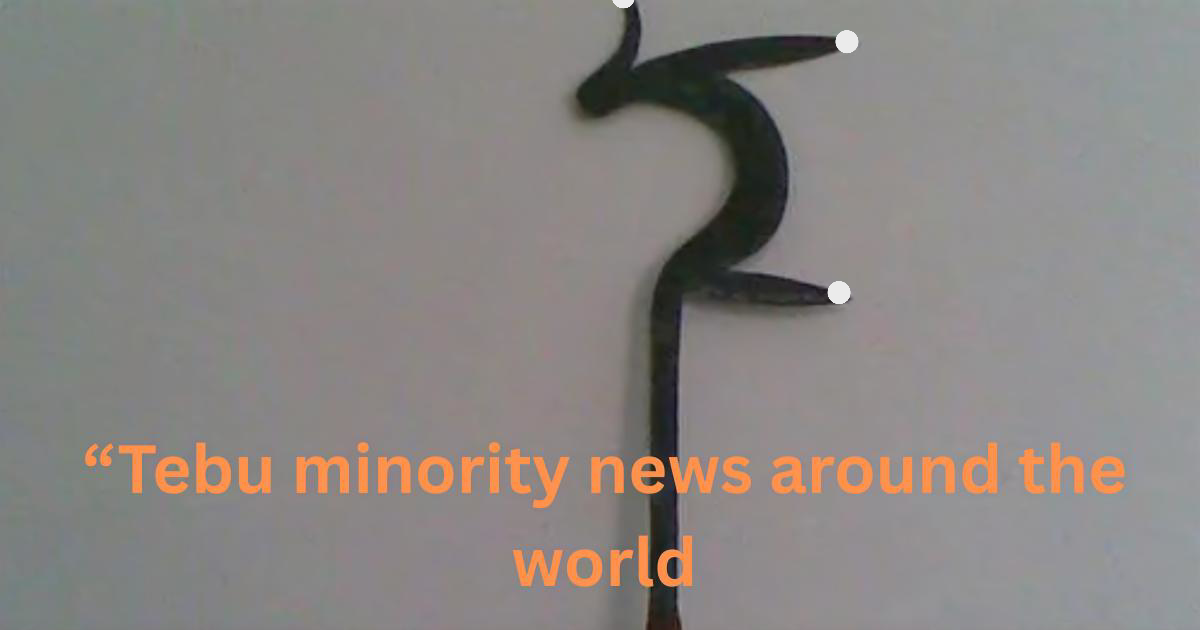
“Tebu minority news around the world
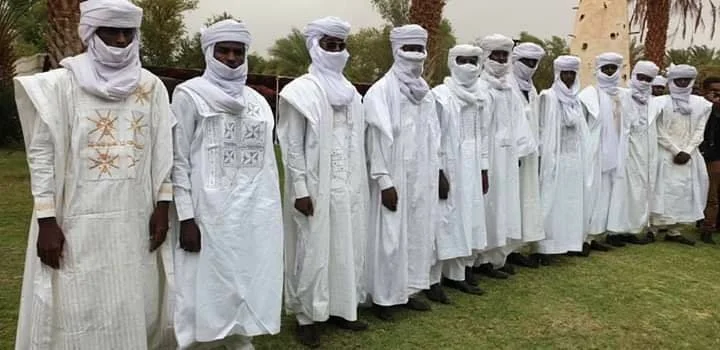
The Tebu are an ethnic minority indigenous to Africa, primarily distributed across four African countries: Chad, Niger, Libya, and Sudan.
They are divided into two main branches:
Teda
Daza
They speak their own language, which has two different dialects:
Tedaga, spoken by the Teda
Dazaga, spoken by the Daza
The Tebu have their own unique customs and traditions. Their society is organized into tribes, clans, and family lineages. They also maintain specific marriage traditions, as marriage between relatives is prohibited up to the seventh generation.
Women hold a strong and respected position in Tebu society. Even after marriage, a woman maintains strong ties with her family and clan. In Tebu culture, the maternal uncle and paternal uncle are regarded with equal importance and respect.
The Tebu are Muslims who follow the Sunni Maliki school of Islam, and there are no significant sectarian
Traditional Tobou medicine book
Traditional Tobou medicine
🌿 Introduction
In the heart of the desert, where sand meets sky and life dances with harshness, the Tebu people have cultivated a rich heritage of knowledge, practices, and wisdom passed down through generations. Among these cultural treasures, traditional medicine stands out as a living expression of the deep bond between humans and their environment—a unique understanding of the body, illness, and healing.
This book is an attempt to document Tebu traditional medicine not as an alternative to modern medicine, but as a complete knowledge system rooted in long-standing experience with nature and grounded in profound cultural and spiritual concepts. It is an invitation to reflect on healing practices that rely on local plants, communal rituals, and a belief in the power of balance between body and spirit.
What inspired me to write this book is a sense of responsibility toward a heritage at risk of fading, and a desire to empower local communities to rediscover and share their knowledge in a language that blends scientific accuracy with cultural respect. I also hope this work will serve as a bridge between generations and as an educational tool for workshops, festivals, and schools—raising awareness about health, environment, and identity.
This book draws on field interviews, direct observations, scientific sources, and contextual analysis of healing practices. I have included photographs, illustrations, and local terminology to offer a visually and intellectually rich reading experience.
In a time of rapid environmental and social change, preserving traditional knowledge is not merely a choice—it is a necessity. Tebu traditional medicine does more than heal bodies; it tells the story of a people, reflects a philosophy of life, and teaches us how to listen when nature speaks the language of healing.
I relied, in documenting this information, on research sources from several scientific references, as well as on personal interviews with some traditional healers. I gathered the available medicinal herbs found in the Tebu environment in their areas of residence, along with the tools used in traditional treatments that are still in practice.
The most important source that inspired the idea for this book was the experience of my mother—may God have mercy on her and grant her a spacious place in His paradise—who was a folk healer practicing cautery treatments.
:
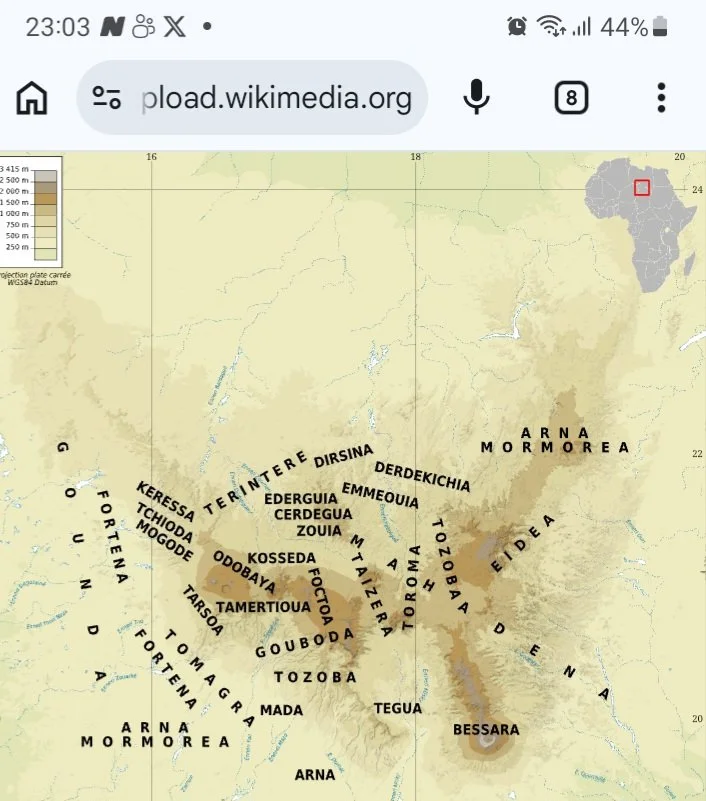
The Tibesti Mountains, the highest mountain range in Africa, are located in northern Chad. They are considered the ancestral homeland of all Toubou tribes. The image above illustrates the distribution of the various Toubou tribes.
The Mystery of Being Lost in the Desert
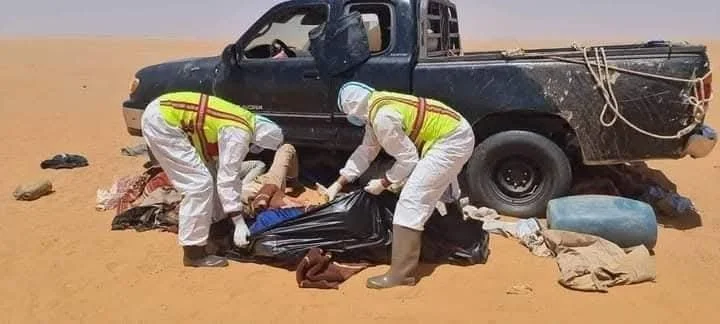
The desert resembles an ocean, making it challenging to navigate without proper guidance. Many individuals find themselves lost while attempting to reach their destinations. The Great African Desert is known to be one of the world's most enigmatic deserts.
People traveling from the south to the north of this desert often face perilous journeys, where many lose their lives due to a lack of transportation and rescue services.
Immigration poses significant challenges for African governments. In recent weeks, numerous accidents have occurred, resulting in the tragic deaths of many young people.
The area between Niger, Chad, and southern Libya has become one of the most dangerous regions of the desert.
Marriage between cousins and other close relatives to be prohibited
Published: Tuesday 26 May 2026 16.01
The Riksdag voted in favour of the Government’s proposal to ban marriage between cousins and marriage where one partner is a direct descendant of the other’s siblings.
The Riksdag voted in favour of the Government’s proposal to ban marriage between cousins and marriage where one partner is a direct descendant of the other’s siblings.
The decision also means that it will no longer be possible for half-brothers and half-sisters or siblings through adoption to be granted permission to marry. Furthermore, marriages between cousins in another country will, as a rule, not be recognised in Sweden.
The purpose of the amendments is to counteract honour-based oppression, violence and other pressure connected with entering into marriage.
The amendments will come into force on 1 July 2026.

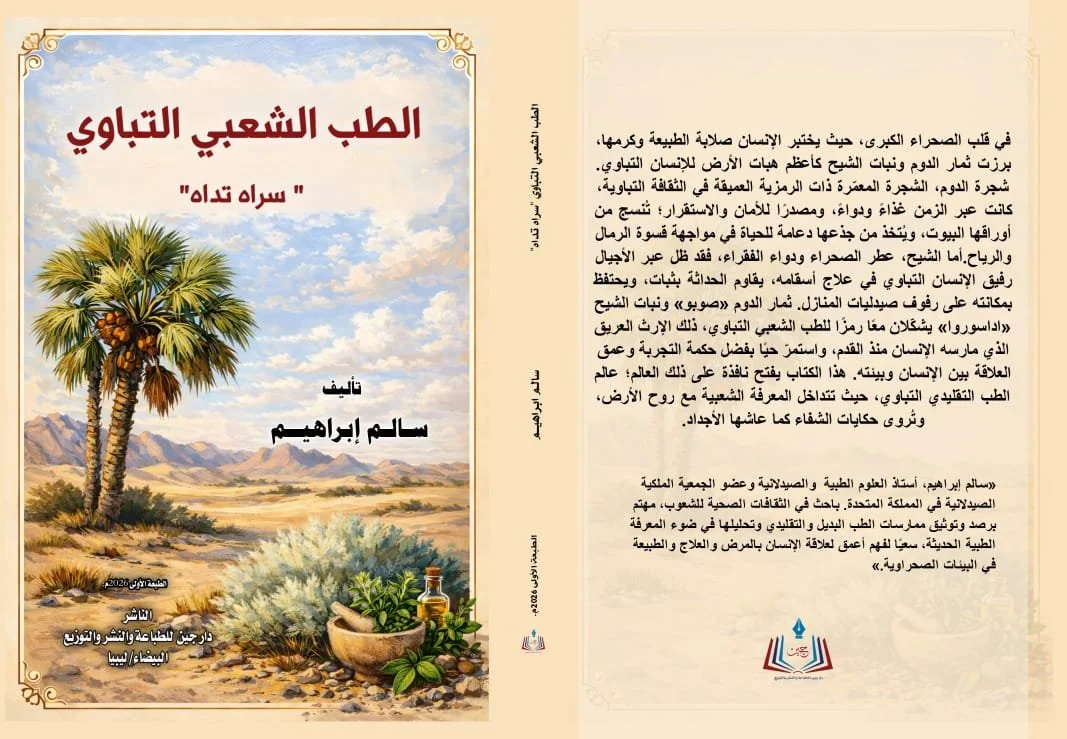
Tobou traditional medicine
pubished book , 2026—by author Dr. Salem Ibrahim
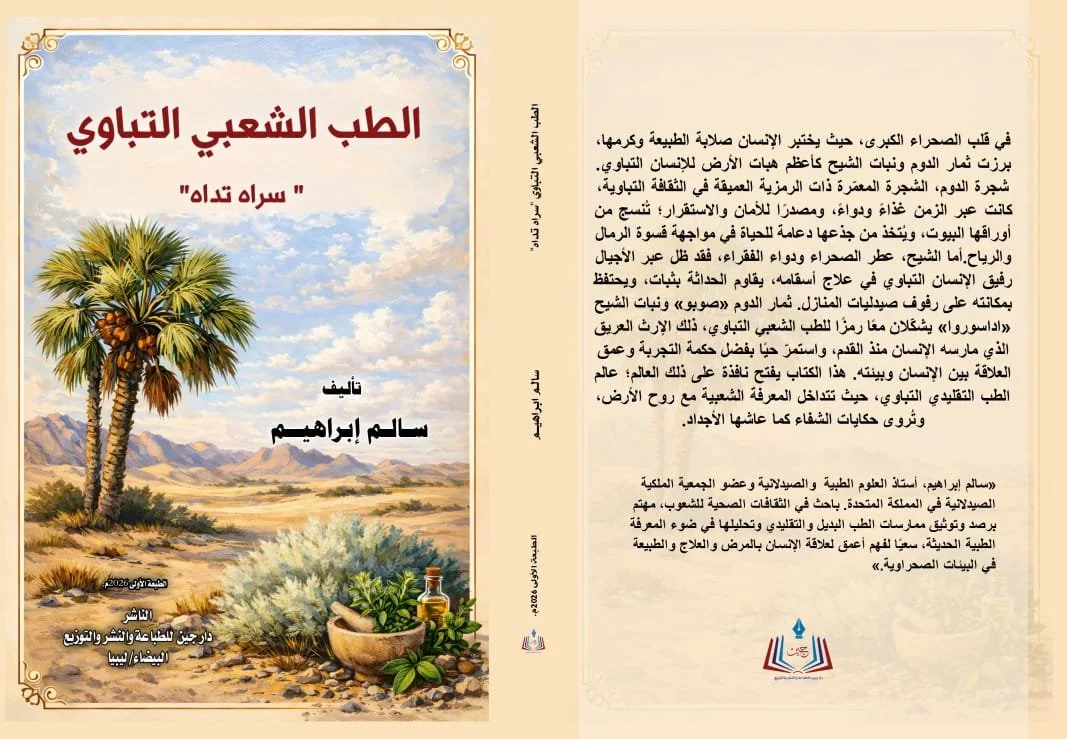
"In the heart of the great desert, where man tests the solidity of nature and its generosity, the fruits of the Doum palm and the plants of the Sheik tree emerged as the greatest gifts of the land to the traditional healer.
The Doum tree — the archaic tree with deep symbolic significance in traditional culture — was a source of food, medicine, and a symbol of security and stability. Its leaves were woven into mats for homes, and its roots were used as a powerful support for life in facing the harshness of the sands and winds.
As for the Sheik plant, it has been the companion of the traditional healer throughout the ages in treating his ailments with plants, preserving its place on the shelves of household pharmacies. The Doum fruits (Soobiyo) and the Sheik plant (Adasoroo) together form a symbol of traditional folk medicine — that ancient heritage practiced by man since antiquity, kept alive by the wisdom of experience and the deep connection between man and his environment.
This book opens a window onto that world — the world of traditional folk medicine, where popular knowledge intersects with the soul of the earth, and stories of healing are told just as the ancestors lived them."
Consanguineous Marriage and Genetic Risks
Consanguineous marriage (marriage between relatives) leads to an increased risk of recessive genetic disorders. Furthermore, any impairment in intelligence levels is also more likely to become apparent due to the resulting reduction in genetic diversity, from which successful genes would typically develop.
In general, couples have a 3% risk of having a child with birth defects. However, this percentage doubles to 6% when there is a close blood relation between the parents. Therefore, careful family planning is essential if parents wish to give birth to a healthy child.
Example
If Daenerys Targaryen, the Mother of Dragons, had a child with Jon Snow, would their child be born with birth defects because the two are related?
Primary Outcomes of Inbreeding
Studies on the theory of inbreeding or intra-familial marriage have proven that there are two main outcomes regarding the resulting offspring:
Expression of Recessive Genes: It can cause recessive genes—both positive and negative—to manifest. Examples include disorders affecting intelligence, autosomal disorders, or conditions that can impact the child's lifespan. These are similar to disorders that can occur even when the parents are unrelated, such as hemophilia, thalassemia, dwarfism, and muscular dystrophy.
Lack of Genetic Diversity: This means the offspring excessively resemble their parents, making them less capable of responding to environmental changes compared to their peers. According to the core principles of natural selection, these characteristics lead to an increased risk of extinction because evolutionary adaptation does not occur across generations.
Assessing the Risks
When asking whether these disorders occur in every marriage between relatives, the answer is that the risks are significantly higher than in non-consanguineous marriages. For instance, a standard marriage carries a 3% risk of giving birth to an offspring with a disorder. However, this number doubles to 6% in marriages between blood relatives.
Note: Do unrelated couples also face the risk of having a child with a genetic disorder? Yes, if either the mother or the father already carries those defective genes. However, prospective parents can undergo genetic screening to determine if these genes are present before pregnancy.
Modern Solutions: Next-Generation Sequencing (NGS)
Using Next-Generation Sequencing (NGS) technology, we can currently identify and prevent the occurrence of genetic disorders. This is achieved through family planning in consultation with genetics specialists who can determine the risks of hereditarily transmitted disorders.
This screening method allows for the rapid, accurate, and highly sensitive detection of genetic mutations in DNA to provide a risk analysis for any future offspring. It ultimately enables couples—whether they are related or not—to create plans that ensure the health and safety of their children.